Saliing Vessel Stamp Collection: Strategic Visual Assets for Narrative Branding
In an era dominated by high-velocity digital content and ephemeral trends, there is a growing strategic advantage in slowing down. Brands, creators, and educators are increasingly recognizing that trust is built not just through speed, but through depth, texture, and perceived permanence. This is where the Saliing Vessel Stamp Collection enters the creative workflow not merely as decoration, but as a tool for narrative positioning. By leveraging the aesthetic of antique postage and maritime history, this illustration set offers a unique pathway to communicate stability, heritage, and thoughtful craftsmanship.
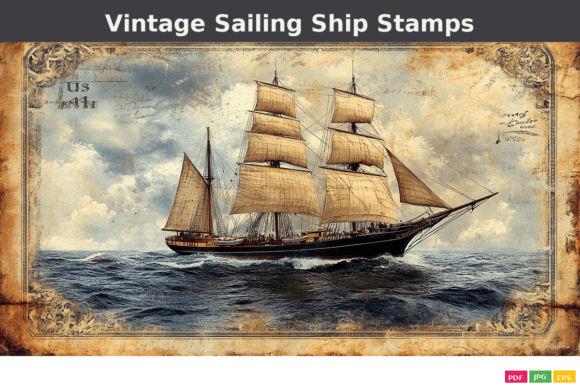
The collection is part of the broader Vintage Sailing Ship Stamps series, a thoughtfully composed assembly of storybook-style nautical artwork. It draws inspiration from antique postage, historic maritime trade routes, and the enduring romance of open seas. However, for the strategic creator, the value lies less in the romanticism and more in the semiotics. Each image features a historic sailing vessel framed like a vintage stamp, utilizing aged paper textures, muted ocean tones, and softly weathered details. These elements do not just look old; they signal authority, longevity, and a connection to human history.
Defining the Aesthetic Authority of Maritime Imagery
To use the Saliing Vessel Stamp Collection effectively, one must first understand the psychological weight of its components. The illustrations focus on classic tall ships and sailing vessels presented as complete, self-contained scenes rather than decorative fragments. This completeness is crucial. In design psychology, fragmented images can suggest incompleteness or chaos, whereas self-contained scenes imply resolution and order.
The fine linework, subtle distressing, and traditional color palettes give the set a timeless, archival feel. When integrated into modern projects, these visuals create a contrast that highlights the quality of the surrounding content. Whether you are designing a brand identity for a consultancy, creating educational materials for a history course, or curating a personal journal, the mood evoked is calm and reflective. It suggests long voyages, handwritten letters, and the quiet authority of ships that once carried goods and stories across the world. This is not loud marketing; it is quiet confidence.
Strategic Applications for Creators and Businesses
The utility of the Saliing Vessel Stamp Collection extends far beyond simple scrapbooking. For professionals and entrepreneurs, visual assets are tools for communication. Here is how thoughtful integration of these assets can support specific strategic goals:
- Brand Positioning and Heritage: New businesses often struggle to establish trust. Using imagery that mimics archival documents and vintage stamps can subconsciously signal that a brand has "been around" or respects tradition. This is particularly effective for companies in finance, law, education, or artisanal goods where reliability is paramount.
- Enhancing Storytelling Spreads: For bloggers and publishers, breaking up text with relevant, high-quality visuals increases retention. The portrait-oriented compositions of the Saliing Vessel Stamp Collection are ideal for sidebar graphics, chapter headers, or pull-quote backgrounds. They guide the eye without distracting from the core message.
- Customer Experience and Packaging: Small business owners can use these illustrations in packaging design, thank-you notes, or digital receipts. The tactile implication of aged paper textures translates well to physical print, enhancing the unboxing experience and making the customer feel they are receiving something curated and special.
- Educational Contextualization: Educators and instructional designers can use these images to ground abstract concepts in historical reality. When discussing global trade, economics, or geography, these visuals provide immediate contextual cues that help learners anchor new information.
Planning Your Visual Integration
Randomly inserting vintage graphics into modern designs rarely yields professional results. To achieve better outcomes, approach the Saliing Vessel Stamp Collection with a clear plan. Consider the following decision-making framework before implementation:
- Audit Your Color Palette: The collection features muted ocean tones and aged paper textures. Ensure your primary brand colors or project themes harmonize with these softer, desaturated hues. Clashing neon or ultra-modern brights may undermine the archival feel unless used intentionally for high-contrast artistic statements.
- Define the Narrative Arc: Each of the 12 storybook-style sailing ship illustrations represents a different aspect of maritime life. Select images that mirror the stage of your customer’s journey or your narrative structure. A ship leaving port might represent beginnings or innovation, while a ship in full sail could represent growth or momentum.
- Consider the Medium: These illustrations are designed with fine linework and subtle distressing. They perform exceptionally well in print media, such as junk journals, art journals, and physical brochures. For digital use, ensure that compression does not erase the delicate textures that give the images their character.
Risks of Contextless Usage
While the Saliing Vessel Stamp Collection is versatile, it is not universally applicable. Using these assets without clear goals can lead to brand dissonance. For instance, a tech startup promoting cutting-edge AI solutions might find that vintage maritime imagery confuses their audience, suggesting obsolescence rather than innovation. Similarly, overusing the distressed textures can make a design appear dirty or neglected rather than vintage and curated.
Another risk is thematic inconsistency. If your content is strictly modern, minimalist, and futuristic, introducing ornate, storybook-style nautical artwork creates cognitive friction. The viewer may struggle to reconcile the visual cue with the textual message. Therefore, always ask: Does this image support the core message, or does it distract from it?
Maximizing Long-Term Value Through Layering
The true power of this collection lies in its adaptability for layering. The illustrations are not meant to stand alone in isolation but to interact with other elements. For scrapbooking with a vintage or historical focus, layering these stamps with maps, letters, and antique ephemera creates a rich, textured narrative. This technique can be mirrored in digital design by overlaying the stamp frames on subtle background textures or combining them with serif typography.
For junk journal enthusiasts and art journalers, the consistent styling of the portrait-oriented compositions allows for cohesive spread creation. You can build a visual language across multiple pages, using the recurring motif of the sailing vessel to tie disparate thoughts and memories together. This consistency aids in memory retention and emotional connection, turning a simple journal into a curated artifact.
Conclusion: Intentionality in Creative Choices
The Saliing Vessel Stamp Collection is more than a set of clipart images; it is a resource for intentional storytelling. By understanding the strategic implications of vintage aesthetics, creators can use these tools to build trust, enhance narrative depth, and differentiate their work in a crowded marketplace. Whether you are a small business owner looking to elevate your packaging, a marketer crafting a campaign rooted in heritage, or an educator seeking to engage students with historical context, these illustrations offer a refined, professional solution.
Remember that new sets are added regularly to the Vintage Sailing Ship Stamps series. Keeping an eye on these updates allows you to expand your visual library continuously, ensuring your creative projects remain fresh while maintaining a consistent, high-quality aesthetic. Use these assets not as filler, but as foundational elements of a thoughtful, strategic visual identity.