Floral Anchor Designs: A Workflow Guide for Creators and Entrepreneurs
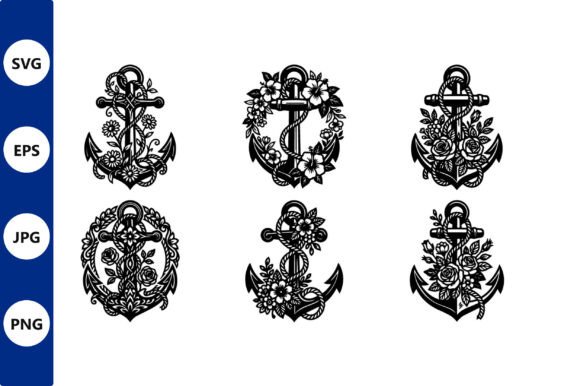
In the landscape of digital asset creation, the intersection of nautical tradition and botanical elegance offers a unique aesthetic opportunity. Floral Anchor Designs represent more than just a visual motif; they serve as a foundational element in the production workflows of tattoo artists, branding consultants, and product designers. These assets feature black and white anchor motifs wrapped with flowers and vines, rendered in precise line work. Each design varies in wreath bloom arrangement and rope detail, providing a versatile toolkit for those who require high-quality graphics that balance structural stability with organic flow. For professionals managing multiple creative projects, understanding how to integrate these specific designs into a broader production pipeline is essential for maintaining efficiency and output quality.
The Role of Line Art in Creative Workflows
Before diving into specific applications, it is necessary to understand why this specific style of line art fits so well into professional processes. The black and white rendering eliminates color management issues during the initial design phase, allowing creators to focus on composition, negative space, and scalability. In a workflow where time is a critical resource, starting with a clean vector base reduces the hours spent on manual tracing or correcting low-resolution imagery. The inclusion of varied wreath bloom arrangements means that a single download can support multiple distinct concepts without requiring the artist to start from scratch. This variety acts as a strategic buffer against creative block, offering immediate options for different client requests or project directions.
The technical specification of these assets is equally important for process optimization. The digital download includes high-quality SVG, EPS, PNG, and JPG formats. This multi-format approach ensures compatibility across the entire spectrum of design software and hardware. Whether a user is working in Adobe Illustrator for vector manipulation, CorelDRAW for print layout, or a raster-based program like Photoshop for texture application, the presence of native file types streamlines the import process. There is no need for conversion tools that might degrade image quality or alter the intricate rope details that define the anchor's character. By having individually cleaned up files, the creator bypasses the tedious cleanup stage often required when sourcing generic clipart, moving immediately to the execution phase of their project.
Integration into Tattoo Design Processes
For tattoo artists, the integration of Floral Anchor Designs into the consultation and stencil phase is a practical application that enhances client satisfaction. The process typically begins with the concept discussion, where the symbolism of the anchor—representing stability, hope, or a grounding force—is combined with the personal significance of specific flowers. Because each design varies in its wreath bloom arrangement, an artist can present three distinct variations to a client within minutes. One might feature a tight, symmetrical wreath suitable for a wrist piece, while another displays a sprawling vine arrangement ideal for a sleeve or back piece.
Once a direction is chosen, the vector nature of the SVG and EPS files allows for infinite scaling without pixelation. This is crucial for tattoos, where a design must remain crisp whether it is inked at two inches or twenty inches. The artist can manipulate the line weight to suit the skin area and the longevity of the tattoo. Thicker lines are often preferred for areas prone to spreading over time, while delicate vines can be preserved in less mobile areas. The black and white line work serves as the perfect underlay for shading techniques, allowing the artist to build depth through gray wash or dot work without fighting against pre-existing color layers. This adaptability makes the asset a reliable component in a tattoo studio's standard operating procedure for custom flash and bespoke commissions.
Branding and Corporate Identity Applications
In the realm of business branding, these designs offer a sophisticated alternative to standard corporate logos. The juxtaposition of the rigid anchor structure with the fluidity of floral vines communicates a brand message of grounded innovation. This duality is particularly effective for industries such as maritime logistics, coastal real estate, artisanal brewing, or boutique law firms seeking to convey trust with a touch of modern elegance. When developing a brand identity system, the versatility of the file formats becomes a key operational advantage. The SVG format ensures the logo renders perfectly on web browsers and responsive mobile interfaces, while the EPS file is ready for large-scale printing on signage and vehicle wraps.
Implementing these designs into a branding workflow requires attention to consistency. Since the collection features varying rope details, a brand manager must select a specific motif to serve as the primary mark and perhaps use others as secondary patterns or background elements. This decision-making process helps establish a cohesive visual language. For example, a company might use a specific anchor-wreath combination for its main logo, while utilizing a simplified version of the vine work for letterheads and packaging. The ability to isolate elements within the vector files allows for this modular approach, ensuring that the brand remains recognizable across all touchpoints without appearing repetitive.
Product Development and Physical Goods
For entrepreneurs engaged in the creation of physical products, Floral Anchor Designs streamline the path from digital concept to tangible inventory. The "print-on-demand" model relies heavily on high-resolution, transparent-background assets, which the included PNG files provide. These are ideal for creating custom wall art, home decor items, and personalized decals. The workflow here involves selecting a design, applying it to a mockup, and preparing the file for the printer. Because the assets are optimized, there is minimal risk of registration errors or blurry edges, which are common causes of returns and customer dissatisfaction in e-commerce.
When producing items like t-shirts, mugs, or tote bags, the black and white line work offers flexibility in color application. A designer can easily recolor the flowers or the anchor to match seasonal trends or specific marketing campaigns without altering the underlying geometry. This capability supports agile inventory management, allowing small business owners to test different colorways with low upfront costs. Furthermore, the detailed rope textures add a tactile quality to the final product, even in flat prints, giving the item a premium feel that justifies a higher price point. The efficiency gained from using pre-optimized files allows the entrepreneur to focus on marketing and sales rather than spending days refining graphic assets.
Technical Preparation and Quality Control
To maximize the utility of these assets, proper preparation and organization are vital. Upon downloading, the first step in any professional workflow is to organize the files into a structured directory system. Separating the vector files (SVG, EPS) from the raster files (PNG, JPG) prevents confusion during the asset retrieval phase. It is also advisable to inspect the individual paths within the vector files to ensure that no stray points or hidden layers exist, although the description notes that each design is individually cleaned up. This quality control check ensures that the files will behave predictably when imported into third-party software or sent to external vendors.
Compatibility testing is another crucial step before full-scale implementation. Users should open the files in their primary design software to verify that fonts, if any, are outlined or linked correctly, and that the stroke weights appear as intended. For those using the assets for laser cutting or vinyl cutting, the clean line work is particularly advantageous. The absence of complex gradients or anti-aliasing artifacts in the vector versions ensures that cutting machines follow the path accurately, resulting in precise cuts for stencils or decorative cutouts. This technical reliability reduces material waste and machine downtime, directly impacting the bottom line for production-focused businesses.
Long-Term Utility and Asset Management
The value of Floral Anchor Designs extends beyond a single project. As part of a long-term asset library, these files contribute to a consistent brand or artistic voice over time. By archiving the original high-resolution vectors, creators ensure that future projects can revisit these motifs without quality degradation. This is particularly important for rebranding efforts or creating anniversary editions of existing products. The modular nature of the designs allows them to be remixed with other assets, such as typography or geometric shapes, to create entirely new compositions. This extensibility protects the initial investment in the digital download, turning a one-time purchase into a recurring resource.
Furthermore, the timeless nature of the anchor and floral motif ensures that the designs do not quickly become dated. While trends in graphic design shift rapidly, the classic interplay of nautical symbols and botanical elements maintains a level of enduring appeal. This longevity makes the assets a safe choice for clients seeking a permanent solution, such as a family crest, a business logo intended to last decades, or a tattoo that will age gracefully. By incorporating these designs into a strategic asset management plan, professionals can maintain a high standard of output while reducing the cognitive load associated with constant content generation.
Conclusion on Implementation Strategy
Successfully integrating Floral Anchor Designs into a creative or business workflow requires a clear understanding of both the aesthetic potential and the technical specifications of the assets. From the initial selection of a specific wreath arrangement to the final export for print or digital display, these files facilitate a smooth transition from idea to reality. Their availability in multiple formats removes technical barriers, allowing professionals to focus on the core aspects of their craft: storytelling, branding, and product development. Whether used for a custom tattoo, a corporate logo, or a line of home decor, the precision and versatility of these designs support a professional, efficient, and high-quality production process. By treating these assets as integral components of a larger system rather than isolated images, creators can unlock significant value and streamline their path to successful project completion.