Black and White Minimalist Bicycle Wheel: A Practical Guide for Designers
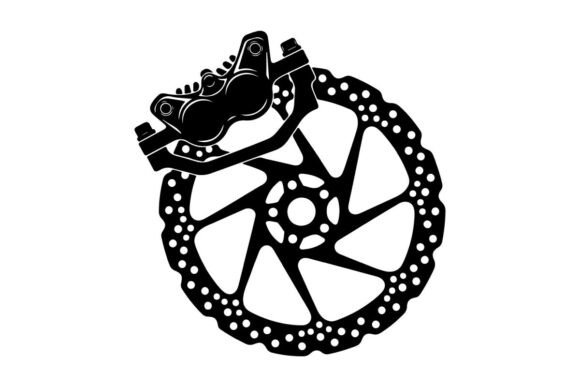
In the realm of graphic design, the choice of visual assets often dictates the tone, clarity, and effectiveness of a final project. Among the myriad of options available, the Black and White Minimalist Bicycle Wheel has emerged as a staple for designers seeking precision and versatility. This specific style of clip art is not merely an illustration of a vehicle component; it is a refined vector silhouette that prioritizes clean outlines, balanced shapes, and a modern aesthetic. For professionals and hobbyists alike, understanding the utility, limitations, and comparative advantages of this asset is essential for making informed decisions in branding, merchandise creation, and digital content production.
Defining the Minimalist Silhouette Style
The Black and White Minimalist Bicycle Wheel is characterized by its reduction to essential forms. Unlike detailed renderings that capture every spoke, bolt, and texture, this approach strips the subject down to its core geometry. The result is a high-contrast image where the negative space plays as significant a role as the solid black areas. This stylistic choice creates a timeless look that avoids dating quickly with changing trends.
What distinguishes this format is its reliance on vector structure. Because the artwork is built from mathematical paths rather than fixed pixels, it maintains crisp detail and smooth edges regardless of scale. Whether used as a tiny icon on a mobile app interface or blown up for a large-format billboard, the integrity of the lines remains uncompromised. This scalability is a fundamental advantage over raster-based images, which often suffer from pixelation when enlarged. The streamlined nature of the design ensures that it integrates effortlessly into complex layouts without introducing visual clutter.
Comparing Formats: Vector Silhouettes vs. Detailed Illustrations
When evaluating design resources, it is crucial to compare the Black and White Minimalist Bicycle Wheel against other common formats, such as photorealistic images, hand-drawn sketches, or highly detailed technical illustrations. Each format serves a different purpose, and the "best" choice depends entirely on the project's goals.
Detailed Illustrations and Photorealism
Photorealistic bicycle wheels offer depth, texture, and context. They are ideal for automotive magazines, product catalogs, or websites where the physical attributes of the wheel—such as material finish or tire tread—are the focal point. However, these images often carry a heavy file size and can dominate a layout, making them difficult to layer with text or other graphics. In contrast, the minimalist silhouette offers a lightweight alternative that supports rather than competes with surrounding elements.
Hand-Drawn and Sketch Styles
Sketch-style clip art introduces a human, organic feel that is excellent for storytelling or casual branding. Yet, this style can sometimes lack the professional polish required for corporate identity or formal packaging. The Black and White Minimalist Bicycle Wheel provides a middle ground: it retains a sense of artistic intent but adheres to strict geometric consistency. This makes it more suitable for projects requiring a modern, sleek, and authoritative tone.
Raster vs. Vector
A critical comparison lies in the file format itself. Raster images (JPEG, PNG) are resolution-dependent. If a designer needs to resize a raster bicycle wheel, they risk losing quality. The vector-based Black and White Minimalist Bicycle Wheel eliminates this tradeoff. It allows for infinite scaling without degradation, ensuring that the design remains sharp on any medium. Furthermore, vector paths facilitate smoother cutting processes for vinyl cutters and laser engravers, a feature that raster files cannot match.
Evaluating Strengths and Tradeoffs
Adopting a minimalist silhouette approach offers distinct benefits, but it also comes with inherent limitations that designers must weigh before committing to a specific asset.
Strengths
- Versatility: The neutral black-and-white palette allows the asset to be recolored easily to match any brand guidelines. It acts as a blank canvas that adapts to various color schemes without clashing.
- Clarity: In small sizes, such as favicons or social media avatars, detailed images become muddy. The simplified lines of the Black and White Minimalist Bicycle Wheel ensure instant recognition even at minimal resolutions.
- Production Efficiency: Optimized vector paths reduce processing time in design software and ensure reliable performance across cutting machines, minimizing errors in manufacturing custom merchandise.
- Timelessness: By avoiding trendy colors or overly stylized effects, this design remains relevant across different industries and eras.
Tradeoffs and Limitations
- Lack of Context: Because the design is stripped of background and texture, it does not convey a specific environment or mood on its own. It relies on the surrounding design to provide narrative context.
- Simplicity Constraints: For projects requiring a sense of luxury, grit, or mechanical complexity, a minimalist silhouette may appear too flat or generic. It lacks the nuance needed to showcase intricate engineering details.
- Generic Perception: If not paired with unique typography or complementary graphics, the simplicity of the Black and White Minimalist Bicycle Wheel might be perceived as unoriginal by audiences accustomed to hyper-customized visuals.
Ideal Use Cases and Decision Factors
Determining when to utilize the Black and White Minimalist Bicycle Wheel requires an assessment of the project's scope and audience expectations. This asset is particularly well-suited for scenarios where clarity and adaptability are paramount.
Branding and Logo Design
For startups, cycling clubs, or eco-friendly transport initiatives, a logo needs to be memorable and scalable. The minimalist wheel provides a strong, recognizable symbol that works equally well on a business card and a storefront sign. Its clean structure ensures legibility, a key factor in effective logo design.
Custom Merchandise and Apparel
When creating t-shirts, stickers, or decals, the ability to cut the design precisely is vital. The optimized vector paths of this silhouette make it an excellent choice for heat transfer vinyl (HTV) and screen printing. The lack of internal gradients or complex shading simplifies the production process, reducing costs and potential errors.
Digital Content and UI/UX
In web design and app interfaces, load times and visual hierarchy are critical. A lightweight vector icon loads instantly and directs user attention without distraction. The Black and White Minimalist Bicycle Wheel fits seamlessly into navigation menus, loading screens, or as a status indicator for fitness tracking applications.
When to Choose Alternatives
Despite its many advantages, the Black and White Minimalist Bicycle Wheel is not a universal solution. There are specific situations where other styles may yield better results.
If the goal is to evoke a specific emotional response through texture—such as the roughness of a gravel road or the gleam of a polished chrome rim—a detailed illustration or photograph is superior. Similarly, if the project targets a niche audience that values historical accuracy or mechanical intricacy, a technical drawing would be more appropriate than a stylized silhouette.
Furthermore, for campaigns relying heavily on vibrant, saturated color palettes to drive engagement, a monochrome base might require significant additional work to integrate effectively. While the silhouette can be recolored, starting with an asset that already incorporates the desired color dynamics might save time in the design phase.
Making an Informed Choice
Selecting the right visual asset is a strategic decision that impacts the overall success of a creative project. The Black and White Minimalist Bicycle Wheel represents a powerful tool for those who value efficiency, scalability, and modern aesthetics. Its strength lies in its ability to serve as a flexible foundation that can be adapted to diverse applications, from branding to manufacturing.
However, its suitability depends on the specific requirements of the task. Designers should evaluate whether the need for simplicity outweighs the desire for detail. By understanding the tradeoffs between minimalist silhouettes and more complex alternatives, creators can confidently choose resources that align with their vision and technical constraints. Ultimately, the best design choice is the one that communicates the intended message most clearly while maintaining professional quality across all mediums.